Tuesday, February 9, 2016

Open Letter to Facebook

First few things about me.

I am an engineer by training and working in the cleantech industry, so directly I do not participate in the business of internet, apps or services but I have a strong opinion about net neutrality and power of the internet to all. I am generally not vocal about my views as I always feel there is another side which is partially correct so voicing strong opinions don't help the process of the collective good.

Recent events have changed me from a mute spectator to someone who is vocal about his/her views in public. The introduction of free internet plans was one such issue where I could not just keep quiet and watch on. I posted publicly many times my opposition to such services and grave danger to future of the internet as we know it. The same internet where I am posting this review without any fear and with same visibility and presence as any top world leader. Anyone in the world can read this and can either agree or disagree with the content. People can reply, abuse or admire based on their choice. This choice is what it is all about. Choice of using the internet the way you want it. So this prompts me to write this open letter to Facebook.

Indian telecom authority just issued an order that ends any practice of preferential treatment to any data or service over the internet. The regulator also put an end to any service that offers differentiated pricing for content. TRAI (Telecom Regulatory Authority of India) thinks that limiting or providing selected access to the internet will have a negative impact in the mid to long term on usage profile of the consumer which is bad for internet ecosystem.

I wholeheartedly support this decision. I think TRAI has taken a good decision which will set up a marker for all other emerging countries. Poor people need connectivity, they do not need exploitation by big corporations in the name of social welfare. People who cannot afford internet connectivity need access to limitless opportunities of the web not a mix of cobbled together services which serve one and only one purpose - keep users locked on to one platform. The reason I write this open letter is not to express support for TRAI decision. Activists and people who have a far bigger stack at this than me will do that. My goal is to highlight the response to this decision from Facebook and urge them to make a course correction.

I admire Mark Zuckerberg, he has achieved a lot and will achieve even greater things but I am worried about his response to the decision.
“While we're disappointed with today's decision, I want to personally communicate that we are committed to keep working to break down barriers to connectivity in India and around the world. Internet.org has many initiatives, and we will keep working until everyone has access to the internet.”

The statement is really a confused one. Mark is personally committed to breaking down barriers to connectivity in India and around the world. A great statement to make but won’t free basics create a walled garden that you can and will control? Will you ever allow Google search in free basics? Will you ever allow Linkedin or Twitter to be a part of free basics? If your answer is no then you are not committed to breaking down the barriers. Facebook can always hide behind the statement that free basics is a platform and any developer can submit an application to be a part of it, but to be realistic, do you think Google, Twitter, Linkedin or any other big company will like their content to be at the mercy of facebook for few million dollars. My guess the answer will be a resounding no. Facebook, Whatsapp and Instagram may have a billion users each but that does not mean that represents internet. Unless Facebook acknowledges this fact there is no meaning in internet.org initiative.

So this brings me to the second part of the statement which talks about internet.org. Internet.org may have many initiatives to bring the internet to the world which is commendable and I will support the efforts any way I can, but don’t mix two things to divert the attention from the key point. It is easy to confuse internet.org’s other efforts with free basics. Free Basics is not the internet. Did I say this before maybe yes, but let me say this again Free Basics is not the internet. Unless Facebook comes out of this bubble that its services mean the internet and that is the only thing people need, it will never succeed in its mission.

If Facebook’s mission is to bring connectivity to this world then it should think about the internet that helped Facebook to come under existence. Imagine if Myspace had Myspace basic that blocked Facebook and offered free usage to Myspace only. Facebook succeeded because it had an open internet to innovate and people connecting to the internet had a choice. When you try to eliminate choice, you move towards an authoritative and restrictive society that stifles new innovations and progress.

A strong analogy to end my letter, our iconic leaders like Gandhiji and Sardar Patel would have lived a happy life in British Raj but they chose struggles to give us our freedom, ability to choose who governs us. Freedom and choice were far more important to them than comforts of the walled garden of British Raj. So why any country or community choose limiting choice for few dollars of internet.org.

I am no one to give advice to Facebook’s CEO, my achievements are nothing and I am not a scholar who has core domain knowledge about this, but I still have a choice to express myself. If Facebook’s mission is to connect people then it should put 100% of its energy in connecting people. Playing games with revenue models and monthly active users with the help of schemes like free basics will help in boosting short-term profits but will certainly dilute the mission. So if Facebook is thinking of reworking the scheme and come back with another idea similar to free basics, it will only signal its downfall. But if it swallows its pride and focuses its energy on really empowering people and connecting them, it will make a huge impact on the development of communities across the globe. At the end, it does not matter how much money you make but what matters is how many people you empower, how many lives you change.   

Signing off
Nikhil  

Saturday, January 30, 2016

Cheap Oil and Electric Vehicles


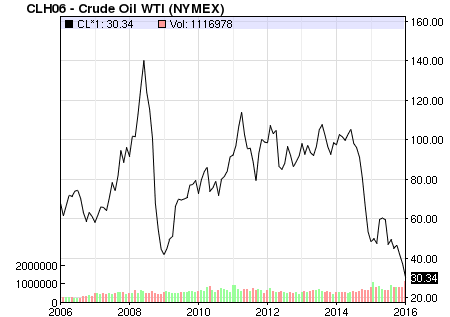
With crude oil prices tumbling to $30 per barrel, immediate questions are raised about momentum of electric vehicle and effects on cleantech industry. During the peak of 2008 the crude oil was close to $150 which is almost five times today’s prices. Doubters will start to write doomsday stories about electric vehicle and renewable energy in general. But those two markets use totally different form of carbon as energy. Energy and transportation both use carbon as their primary source of fuel but automotive industry is dependant on fossil fuels while energy sector is dependant on coal and natural gas. So this drop in crude oil price will have more impact on electric vehicles than on solar/wind power generation.  

Crudeoil price 10 year.png
Crude oil price graph over last 10 years.

Many people have raised the voice for carbon tax as a mitigation of lower crude oil prices but I think we are still far away from getting an agreement on some kind of carbon tax. I totally support it but still think we don’t have correct measuring mechanism to implement that.

I think the discussion has moved from whether electric vehicle is a solution to how to integrate electric vehicles as a solution. With beginning of a new year, war against pollution is gaining momentum. Delhi has started with a positive move to address the desperate situation of air pollution. But more things will be needed to get the pollution down to manageable levels. Low crude oil price has adversely affected the return on investment in electric vehicles. But reduction in battery cost and improved cycle life has reduced the cost of electric vehicle operation. This will help in keeping the momentum going on electric vehicles.


Vehicle pollution is a major contributor to PM2.5 and PM10 pollution. CO2 emissions are important for fighting climate change but immediate issue facing all major cities around the world is PM2.5, PM10, NOx and unburnt fuel emissions. Electric buses have paved the way of electric mobility in China. India can learn a lot from China, India faces similar problems of crowded cities, large number of vehicles getting added on roads every day and reduced quality of life because of pollution.

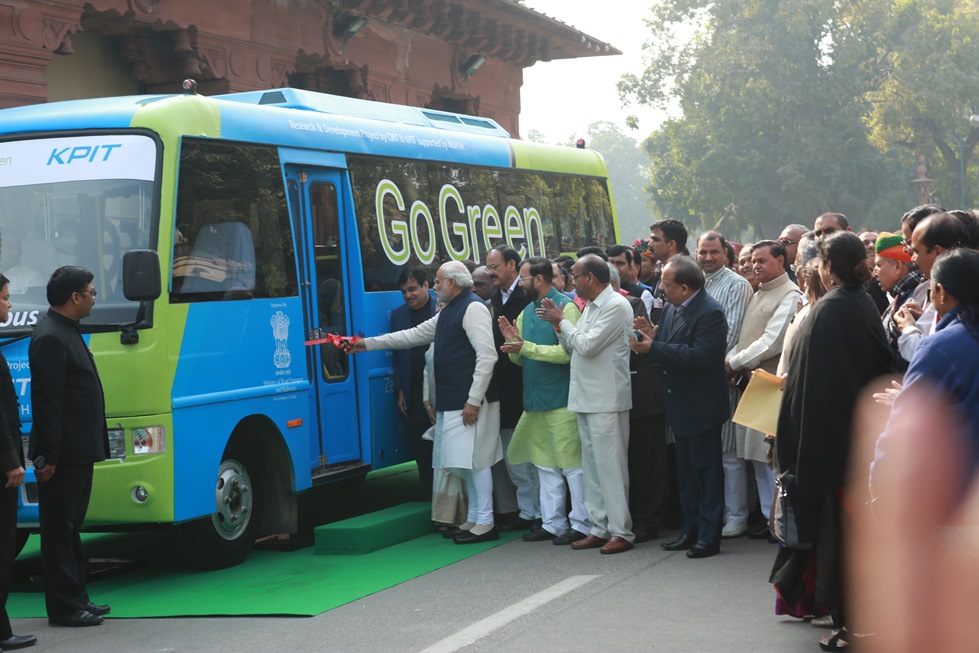
Indians currently buy more than 200,000 cars a month. That means every year we are adding 2.4 million cars on roads. Number of motorcycles will be almost two times that number. India also faces unique challenge of old buses and trucks still running on road. Indian government has started FAME India scheme that will encourage electric vehicles. Making a dent in sale of gasoline cars is going to be a challenge as electric vehicle charging infrastructure is almost non-existent. Launching an electric bus project in parliament is a great start as it gives a much needed publicity to electric vehicle market.

electric_bus.jpg
Indian Prime Minister Narendra Modi launching KPIT Built Electric Bus.

Electric bus provides a great use case. The routes are fixed, the buses are parked in defined spots in depots. This will enable setting up a charging infrastructure and reduce major contribution of Diesel emissions of NOx, PM2.5 and PM10 emissions.
Although diesel prices have reduced, electric buses are still cost effective as kmpl of average city bus with lot of stop and go traffic condition is very low. Using electric buses as a starting point helps in two ways. One, it introduces electric vehicle technology to masses. People who cannot afford to buy a car or two wheeler can still experience electric vehicles and second, it will eliminate cars on roads. A bus carrying 40 people can reduce 10 cars from road. So deploying electric buses will add double benefit to fight against pollution.

Low crude oil price may not last for long as it's a very cyclical industry. Government should take advantage of money saved on importing crude oil and invest almost all of it in renewable energy and electric vehicles. India currently imports more than 3.2 million barrels of crude oil per day. With this reduction in crude oil price, India is saving $30 billion in spending. That is a massive amount of money. Instead of letting it pass on to consumers, Government can easily spend that money on long term strategic investments like Solar Power and Electric vehicle charging infrastructure. Even though the crude oil price is at $30 per barrel, we should not forget that fossil fuel is limited resource and price of that commodity will surely increase when demand meets the production capacity.

So governments all across the world should think of this dip in crude oil price as great investment opportunity in renewable energy and electric vehicle infrastructure. Money not sent to oil producing countries can be deployed in securing long term energy access for poor. We have to look at the dip in crude oil price as an opportunity to invest money in securing future energy and double down on fight against pollution.

Saturday, August 15, 2015

Infrastructure is the key


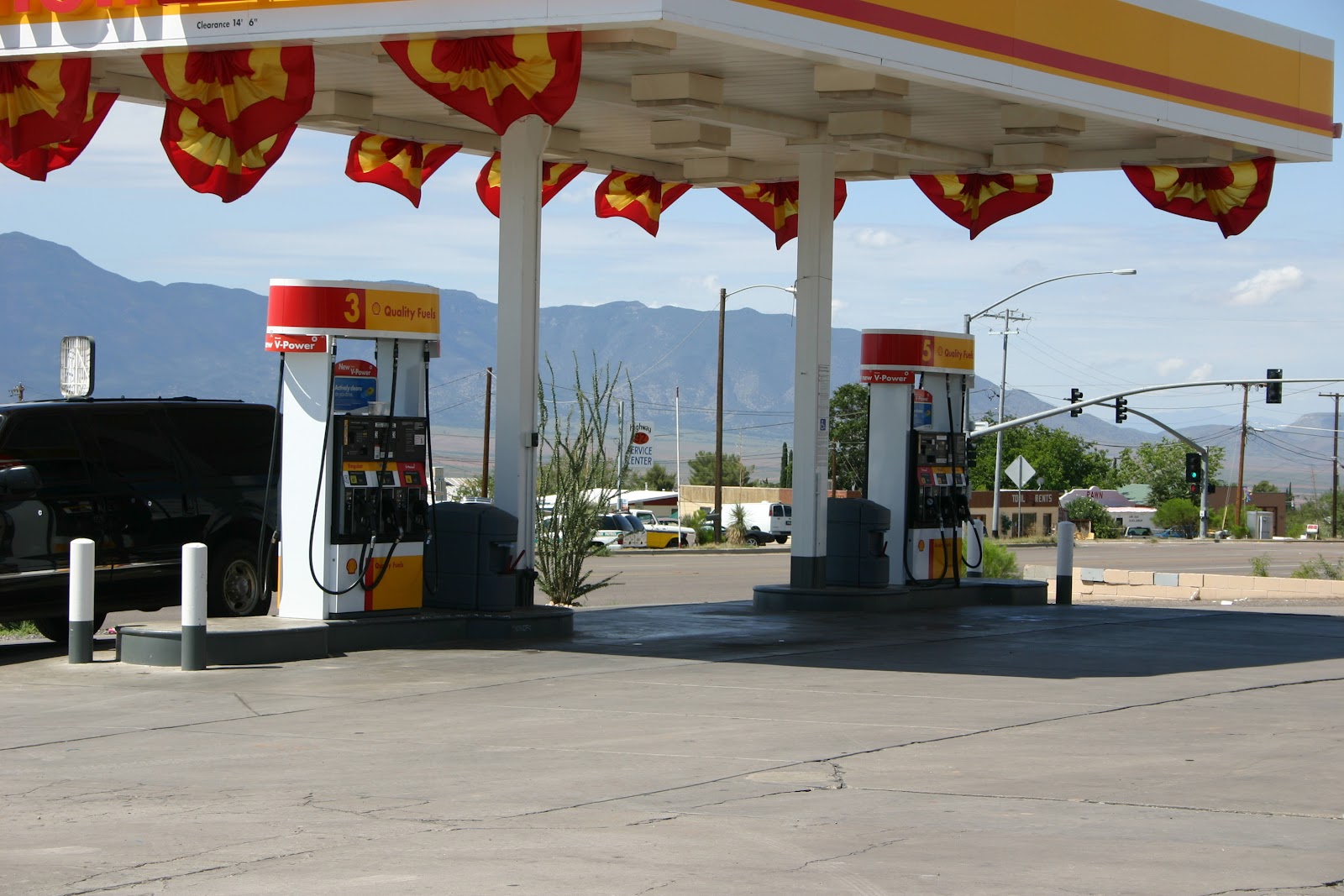
If you buy a car or bike today you don’t even think whether I will have fuel station near my home? Will I be able to get access to simple refueling options? I guess many people think of what is the cost per kilometer for driving the vehicle but seldom someone considers whether they will have a place to fuel the vehicle. The refueling infrastructure for petrol and diesel is well established and supply chain for gasoline is spread across the world. Very few places in developed and developing worlds are without proper gasoline infrastructure. This makes decision making regarding buying gasoline car/bike very easy.

file0002081323919.jpg

That all changes when we start talking about electric vehicles. The first question is not affordability of operational cost but availability of the refueling.

There are many startups in the electric vehicle space focusing on the drive system and vehicle integration. Company I work for focuses on designing and manufacturing of battery systems. Plugging in my company website (www.octillion.us) But very few companies are in the market focusing on innovation in electric vehicle charging. In the USA the condition of infrastructure is improving. But US has a different challenge that distance between places is large and daily driving distance is higher than other countries. This necessitates more charging stations and high power charging to cater to the large geographic footprint.

Europe and emerging countries like India and China have some advantage as the population density is high and average driving distance is small. Smaller driving distance directly relates to smaller battery packs and smaller charge times.

In India electricity charging infrastructure remains the largest hurdle in deploying large number of electric vehicles. In cities where electric vehicles make most sense, the charging infrastructure is non existent and difficult to implement. Failure of earlier electric bikes was partly because of lack of charging infrastructure. Mahindra is not able to sell more Reva cars because people don’t have a clear use case. How they will integrate vehicle charging time in their daily life is a difficult question they are struggling with and EV companies are not particularly helpful. For example a person living in a high density urban area where EV makes the most sense, can not charge the car or ebike unless there is an arrangement at his high rise. Unless we make a policy to install common electric vehicle charging station for high rise buildings, the adoption of EV in urban area will be a challenge.

file3861274577103.jpg

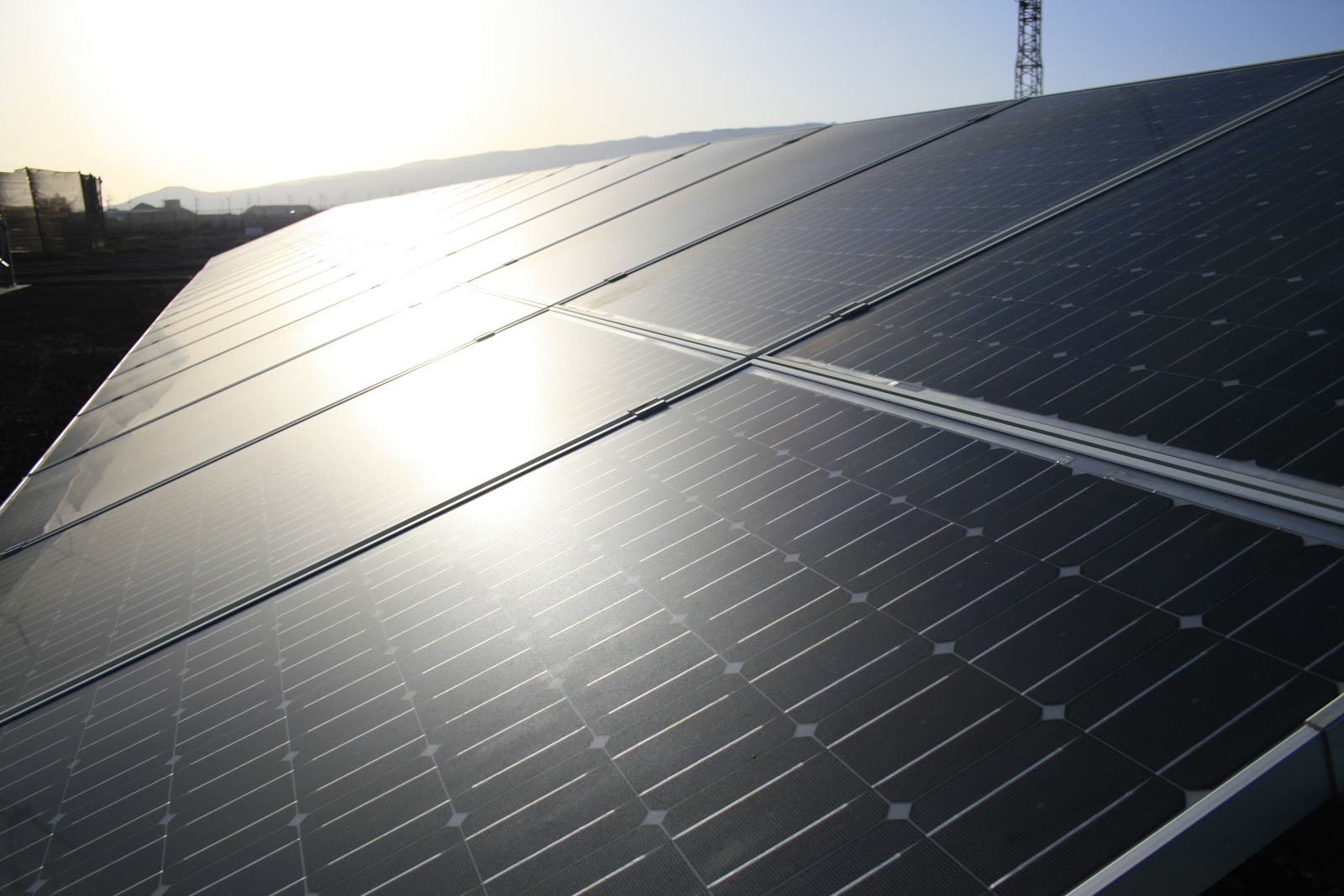
Grid reliability is adding another dimension to already complex charging infrastructure problem. That is why I think there is a need of government push. I don’t like to involve government on projects as it adds to delays and mishandling of issues, but in case of setting up the infrastructure that is not going to provide high rate of return, only govt can achieve the task.  Solar+battery+EV charging is the most reliable and long term feasible option for India. Considering all aspects of grid reliability, insufficient substation level infrastructure and electricity theft concerns, solar EV charging will be a great option.

file5731334413865.jpg

Solar energy is now close to achieve lower cost of generation than grid and considering that India has more than 8 months of high solar radiation, it will be a great fit to couple Solar energy with electric vehicle charging providing a complete zero emission ecosystem.

So we as an electric vehicle proponents have to push govt to commit funds for charging infrastructure. Without that, the next wave of electric vehicles will also face similar challenges as the last one. Let us start a petition to address lack of public EV charging stations. Govt has control of most of the petrol pumps in the country and easiest way is to deploy 5 charging stations per petrol pump. This can never happen in cities in US or Europe as petrol companies are private and vehemently oppose the electric vehicle movement,  but in India, the government can easily direct HPCL, BPCL and Indian Oil to do so. I think this is a great opportunity to promote and facilitate electric vehicle infrastructure.

India like China has to view electric vehicles as a national security priority. India cannot forget how in the past it had to compromise on national security because of lack of oil supplies. So it is very important that we move away from gasoline cars and buses. New government is trying to take holistic approach to energy and transportation need, so hopefully we see some progress in the critical charging infrastructure space.

Saturday, July 13, 2013

The Power to Charge Electric Vehicles comes from coal argument

The argument “The power to charge EVs comes from Coal” is thrown at EV enthusiast and early adapters of EV technology all the time. Although I am a big proponent of electric vehicles, I am not a blind supporter. I acknowledge the fact that emissions from coal fired power plants are major part of total emissions from EVs. So I decided to gather some basic data and crunch some numbers.
I will like to mention the assumptions made in this analysis
  1. The emissions from the tailpipe are calculated using EPA formula.
  2. Emissions from gasoline and hybrid vehicles are purely from burning the gasoline. Transport of crude oil, refining, transport of gasoline is not counted as I don’t have all the data.
  3. MPG and kWh/mile are from EPA stickers and testing data.
  4. All emissions shown are per mile.

With these assumptions in place, let us move towards actual math of it. Let us start with electric vehicles. There are various scenarios for emissions caused by electric vehicles. In real life there is zero tailpipe emission, but here “the power to charge EVs comes from coal” argument comes in. In today’s world, no power grid is using coal as a fuel for 100% of the electricity production. In US, Europe, India and China there is a good mix of natural gas, coal, nuclear, hydro power and renewable energy source. Considering this, I have created three different scenarios of grid power mix. 100% coal (for skeptics), 50% coal and 50% natural gas and 1/3rd of each Coal, Natural Gas and renewable energy (Likely a 2020 scenario)
The information from eia.gov indicates the pounds of CO2 emitted per kWh of power generation. Let us assume all coal used for power generation is lignite coal (only 7% of this type is used in USA and this is the worst energy dense coal producing maximum green-house-gas emissions.  Please refer to the reference.  http://www.newcenturycoal.com/newscentre/coalinfo.php. Still to satisfy critics I am going to use highly polluting version of coal to calculate all emissions.)  So from the table below, it is shown that each kWh of electricity will emit 2.18 pounds of CO2.


Now let us take example of Nissan Leaf, the current largest selling electric car in the world. With EPA estimated range, Nissan leaf will consume 0.26kWh/ mile. Please consider that EPA estimated range is for 80% of battery usage so I am going to use that amount to calculate kWh/mile. So one mile operation of Nissan leaf will emit 0.57 pounds of CO2 when it is charged by electricity sourced 100% from coal fired power plant. I did similar calculations with Tesla and Chevy Volt, using the EPA estimated range numbers. All the calculations are available in the excel spreadsheet.  

Now let us take a look at emissions of conventional engines and hybrids. There are various types of vehicles with different MPG levels. To be fair, I used 15, 25, 35 and 45 MPG as standards. According to EPA, one gallon of gasoline produces 8887 grams (19.59 pounds) of CO2. Based on this data and formula mentioned below, I calculated CO2 emissions per mile using above mentioned MPG values. Again to be fair and non-biased, I added multiple MPG levels. I understand actual driving MPG can be lower but same can be said about EVs. Actual range of EVs also depends on driver behavior.


So after crunching these numbers, I got very interesting results. The table below shows the numbers I got. The excel spreadsheet is available for download (Link: http://bit.ly/18bI2xV )

Emissions per gallon of gasoline
19.59
Lbs
Emissions
kWh/ Mile or MPG
Coal
Nat Gas
50-50
33-33-33
Emission per kWh based on grid mix
2.18
1.22
1.7
1.13
Leaf
0.26
0.57
0.32
0.45
0.30
Volt
0.35
0.76
0.43
0.60
0.40
Tesla
0.23
0.51
0.28
0.40
0.26
Gasoline
15.00
1.31
1.31
1.31
1.31
Gasoline
25.00
0.78
0.78
0.78
0.78
Gasoline
35.00
0.56
0.56
0.56
0.56
Hybrid
45.00
0.44
0.44
0.44
0.44
Min Value
0.44
0.28
0.40
0.26
Diesel Bus
4.5
4.35
4.35
4.35
4.35
Electric Bus
1.9
4.14
2.32
3.23
2.15

The calculations were very close to my expectations. Only interesting fact that I observed is the fact that electric vehicle will reduce tremendous amount of emissions even if we just use natural gas instead of coal. I also calculated same emission calculation for heavy duty diesel buses. And surprisingly electric buses will emit less even if we use 100% electricity from the coal fired plants. So when we compare the results, we find with 100% coal power, hybrid vehicles with 45MPG fuel economy are the least emitting option. Overall emission from hybrid vehicles like Prius are lower than EVs when power is sourced 100% from Lignite (the worst quality coal available) based power plants.

Another major point is the fact that gasoline cars can never be made cleaner. Once you buy a new gasoline car, it can only get more polluting over time. But electric vehicle emissions can be reduced by improving the power mix of the grid. So as we move towards cleaner grid, automatically we will go towards cleaner EVs. We do not need to repair, install additional equipment or replace these vehicles to be cleaner.  


All this data crunching and efforts are to answer one argument, “The electricity to charge EVs comes from coal.” Of course this calculation is overly simplified version of the actual carbon footprint. But I will start adding data as and when I get access to it. There are transmission losses, charger to battery loses for an electric vehicle but similarly there are refining losses, leakages and spills in gasoline ecosystem. 

Signing Off
Nikhil Parchure

You can download the PDF copy of this analysis here: http://bit.ly/15seNED
The link for excel spreadsheet is : http://bit.ly/18bI2xV

Tuesday, June 4, 2013

Electric Vs Gasoline - The war of ecosystems.

by Nikhil Parchure

When people think of electric vehicles, they think about battery technology, electric drive train and charging systems. But to be fair, the electric vehicle revolution is far more than that. It is a total shift from the gasoline ecosystem we are living in for the past century. Let me explain what I mean by the gasoline ecosystem. Crude oil is pumped from the oil wells and then refined to produce gasoline, diesel, jet fuel, plastics, solvents, lubricants and tar. These multiple products are made from a single raw material. All these products are sold in high volumes and due to high volumes, petroleum refineries manage a near perfect (100%) efficiency. The investment required to set up oil wells, refineries and transport infrastructure is shared by 1000s of products derived from the crude oil. So when you look at the gasoline prices, it has a huge advantage of cost sharing with all other products. 

Now as the gasoline was cheaper and more energy dense than batteries storing the electricity, gasoline ecosystem won the race in the transportation sector. Prior to commercialization of gasoline cars, most of the cars were electric. In the United States companies like Baker electric were making electric cars. (See Jay Leno's Baker electric car demo : Link) but the cost effectiveness and convenience of gasoline cars made these electric cars obsolete. Gasoline cars succeeded because of the convenience and freedom from the limited range of electric cars. People using horse carts and slow trams were able to drive 10 times faster and were able to go to locations not reachable by other means available.

This boom of gasoline cars helped the development of efficient internal combustion engines and that engine technology made inroads in all modes of transportation. Trucks, buses, planes, boats and cars all shared platform developed on the gasoline ecosystem. More cars increased the demand for gasoline which in-turn boosted the output of refineries. This improved volume reflected in more efficiency and further reduction in the cost. The benefits of this cost reduction were significant and were seen across all industries. Many people blame gasoline as a major reason for the global warming but we cannot ignore the tremendous development that gasoline brought to the man-kind. We should not dismiss the achievements of gasoline as a fuel. Cars, tractors, emergency generators and even our lawn mowers are powered by gasoline engines. That may have accelerated the problems of global warming but at the beginning of the century our understanding of global warming was fairly limited. 

During this boom of the gasoline economy, one thing remained surprisingly constant and that is our source of electricity. Even though gasoline became cheaper and improved in efficiency, the internal combustion engine still could not match the efficiency of turbines in thermal power plants. Coal fired power plants are still more efficient than gasoline generators and have provided cheap electricity over past many decades. Cheap coal was hard to replace by gasoline as coal needs no refining or purification, it can be mined and directly used as a fuel. 

Now we are again at an interesting juncture in the history of the mankind. Electric vehicles with advanced battery technology are challenging the gasoline economy. People against electric vehicles may point out the cost and range as major hurdles in the mass adoption but they can not deny the fact that efficiency of the electric motor (95%) will give internal combustion engine (30% efficiency) a run for the money. 
Now the next major challenge for electric vehicle makers is the cost. Interestingly we can learn a lot from the rise of the gasoline economy. The strength of gasoline economy was not only the energy density and convenience of the system but also range of products supporting the system. To make electric vehicles successful, we can reapply the same principle to batteries (fuel storage for EVs) 

We have to make Electric vehicles part of the electric ecosystem. The war is not between who powers your car but war is between who can deliver the usable energy at the cheapest and most convenient way to the end user. The diagram below shows how the ecosystem supports various applications. Each application provides additional volume and advantage to the overall ecosystem. The base of the gasoline ecosystem is crude oil and base of new emerging ecosystem is the battery system. 

electric vehicles vs gasoline vehicles war of ecosystems
Comparing two ecosystems

As we bring more and more applications on a single platform, the efficiency of the manufacturing and cost of the system will drop. And as the cost of batteries and power electronics drops, more and more applications will become viable. This is a very good cycle which will be able to challenge the current gasoline ecosystem. Electric vehicles or any other new technology can win only if the whole ecosystem wins. The hydrogen fuel cell ecosystem is another ecosystem that can challenge the gasoline ecosystem but again to win the war, hydrogen fuel cell has to challenge the whole ecosystem and not succeed only in niche applications.  

I am convinced that the electric ecosystem will have the last laugh. The transition will be a slow gradual process and we will be able to see it pan out over next few decades. Although the issues of global warming will drive the change, the cost of the system remains the ultimate tipping point. By no means I am discrediting the gasoline ecosystem, it has contributed tremendously in the development of mankind but we need the electric ecosystem to take the next step. 

How to take care of your two wheeler battery

Electric Two-wheeler and Electric Bicycles are becoming very popular means of transportation. Either you want to be environment friendly or ...